Tongue Stays Low
A tongue that won't rest on the roof of the mouth may not be able to due to a tie. This often comes with mouth breathing.
Tethered Oral Tissues
Myo therapy is necessary before and after a release.
A tongue-tie is a tight band of tissue under the tongue that limits how the tongue moves and where it rests. Lip and buccal (cheek) ties are also restrictive oral tissues that may need a release. Myofunctional therapy prepares the tongue before a release and retrains it afterward, so the new range of motion is actually used.

Unless a tie is severe, its impact on function and development can't be determined with a quick look.
A tongue that won't rest on the roof of the mouth may not be able to due to a tie. This often comes with mouth breathing.
The tongue pushes forward against the teeth when you swallow. This can cause a labored swallow or open bite.
Teeth that shift after braces come off because the tongue isn't doing its job as a natural retainer.
Neck and shoulder tension, or jaw (TMJ) issues.
Trouble with chewing, swallowing or certain food textures.
A lisp, or trouble with certain sounds like l, r, s or th.
When the tongue is tied to the floor of the mouth, it's hard, or impossible, for it to rest on the roof of the mouth. That makes lip seal and nasal breathing harder too. A low-resting tongue can also fall back toward the throat during sleep.
In growing children, a tongue that can't reach the palate doesn't help guide the jaws to grow ideally.
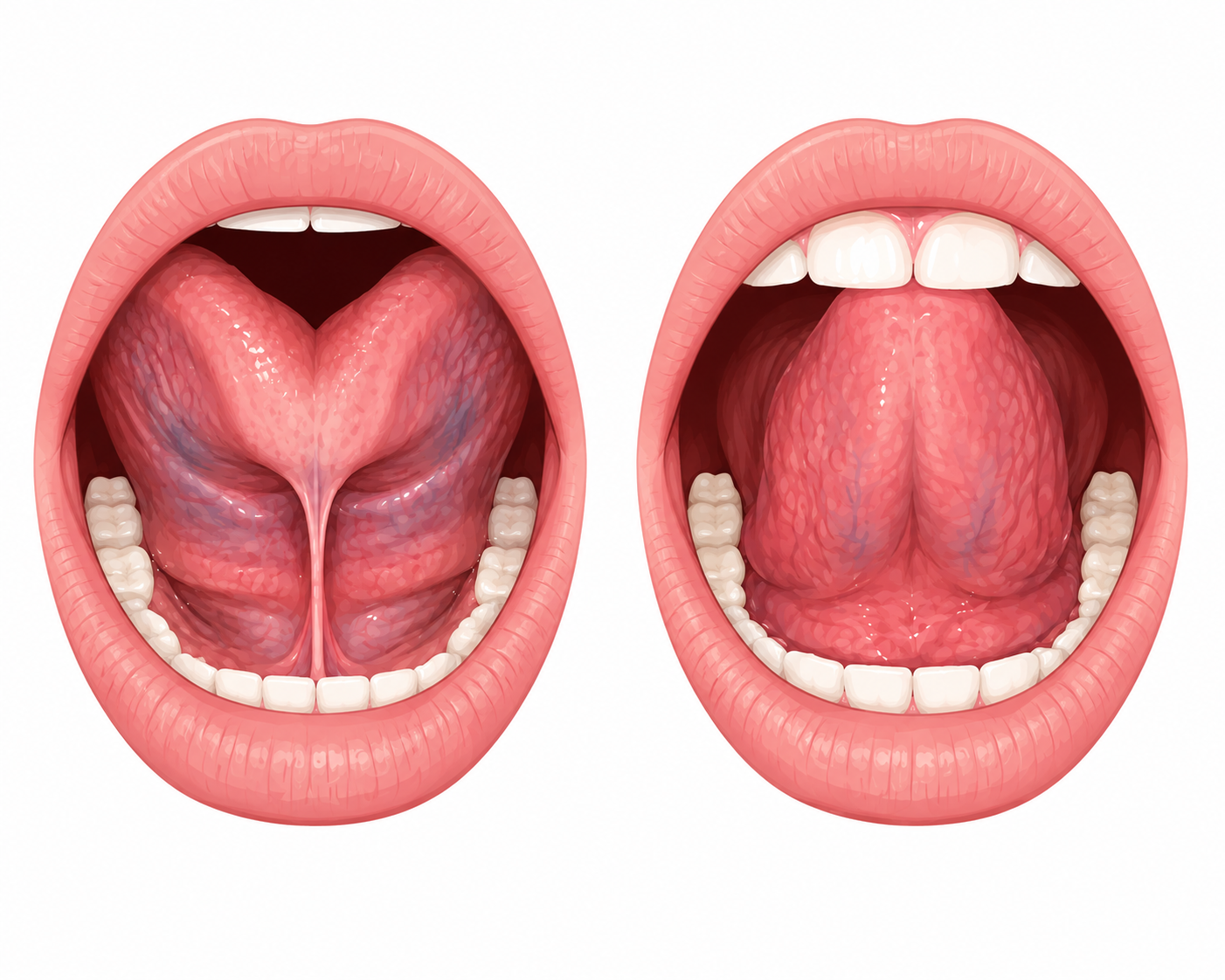
Exercises build strength and awareness, so the tongue is prepared for the release procedure.
The release is done by a provider trained in functional frenuloplasty, who works hand in hand with your myofunctional therapist.
Learn moreTargeted exercises improve mobility, help keep the tissue from reattaching, and support healing.
A tongue-tie is one kind of tethered oral tissue. The same kind of tight band can form in other places in the mouth.
A tight band between the upper or lower lip and the gum tissue. When the lip can't move freely, it can affect lip seal, breathing and growth.
Tight bands between the inside of the cheeks and the gums. They can limit how freely the cheeks and lips move.
A release improves the tongue's function and range of motion.
60 to 90 minutes in person at our Ithaca office. We look at your history, symptoms, structure and function to get a whole-picture view of what's going on with your breathing, sleep and oral muscle habits.
Sessions every 1 to 3 weeks, virtually or in person, to learn exercises tailored to your specific needs. Exercises are simple (and fun!) and progress through your program.
About 10 to 20 minutes a day: working on tone and coordination, ultimately building new habits around breathing and oral function patterns that become automatic.

Ashley works alongside release providers trained in functional frenuloplasty, as well as dentists, ENTs, speech-language pathologists, lactation consultants and body workers. If your assessment suggests another provider should be part of your care, we will suggest that or work with who you already see.
A release is a team effort. At Ithaca Myofunctional Therapy, we prepare the tongue before the release and retrain it afterward, and we share our assessment and recommendations with your release provider so everyone is working from the same plan.
You can schedule on your own, or your provider can fill out our digital referral form. A referral is not necessary.
A frenectomy is a simple release of the tissue, done with a laser or surgical scissors.
A functional frenuloplasty is done by a specially trained provider. They release enough of the attachment to give the tongue its full range of motion, with airway health in mind. They also work directly with a myofunctional therapist, who does the functional work the release needs, so you get the best possible result. It involves precise technique, therapy prep before the procedure, and sutures placed to reduce the risk of reattachment.
Your assessment takes 60 to 90 minutes in our Ithaca office. Ashley reviews your health history, looks at how your mouth, tongue and face muscles are working, and takes measurements to build your plan.
What to send us:
The Pre-Assessment Guide walks you through what to notice before your appointment.
A myofunctional therapist can assess you for tongue, lip and buccal ties and how they are affecting you. Ties are not always obvious, and they are also not always a problem, and they should not always be released. Some sit further back under the tongue (a "posterior tie"), and being able to stick your tongue out does not rule one out. A functional assessment looks at how far the tongue can move and how that affects the jaw, resting position, swallowing and breathing.
Yes. Many adults have a tongue-tie that was never identified, sometimes because it was not obvious in infancy. Adults with tongue-ties oftentimes come to us with concerns like mouth breathing, tongue thrust, jaw tension or orthodontic relapse.
Yes. Therapy before a release helps prepare the tongue and surrounding muscles for the procedure. Your release provider and Ashley will coordinate the timing of release within your therapy program.
After the release, therapy retrains the tongue to move and rest in its new range, supports healing and works toward healthy function.
No. Ashley provides the therapy before and after a release and coordinates the release timing with one of our preferred providers who is trained in functional frenuloplasty.
We are very particular about this. We ask that your release be done by a provider trained in functional frenuloplasty. How much of the attachment is released, and how the release is planned around therapy, makes a real difference in how well the tongue heals, functions and rests afterward.
If your provider has this training, we will coordinate your care with them. If not, we have preferred providers we can refer you to.
No. If the tie is affecting your function and health, as determined by a comprehensive assessment here at Ithaca Myo, and you don't have compromising factors that would interfere with a release, then we will recommend it as part of your therapy plan. The release provider takes our recommendation and report into consideration when they see you and decide to move forward with the procedure.
Call us at (607) 602-2886
Hours: Monday–Thursday, 8:30 AM–4:00 PM, or appointments by request