Snoring That Can Be Heard
Snoring that a partner or someone else notices, or that wakes you up.
Sleep Disordered Breathing
Why it happens, and what can help.
Snoring happens when air squeezes past relaxed tissue in the throat and mouth during sleep. Myofunctional therapy works on the tone and resting position of the tongue, lips and throat muscles, which may help reduce snoring.
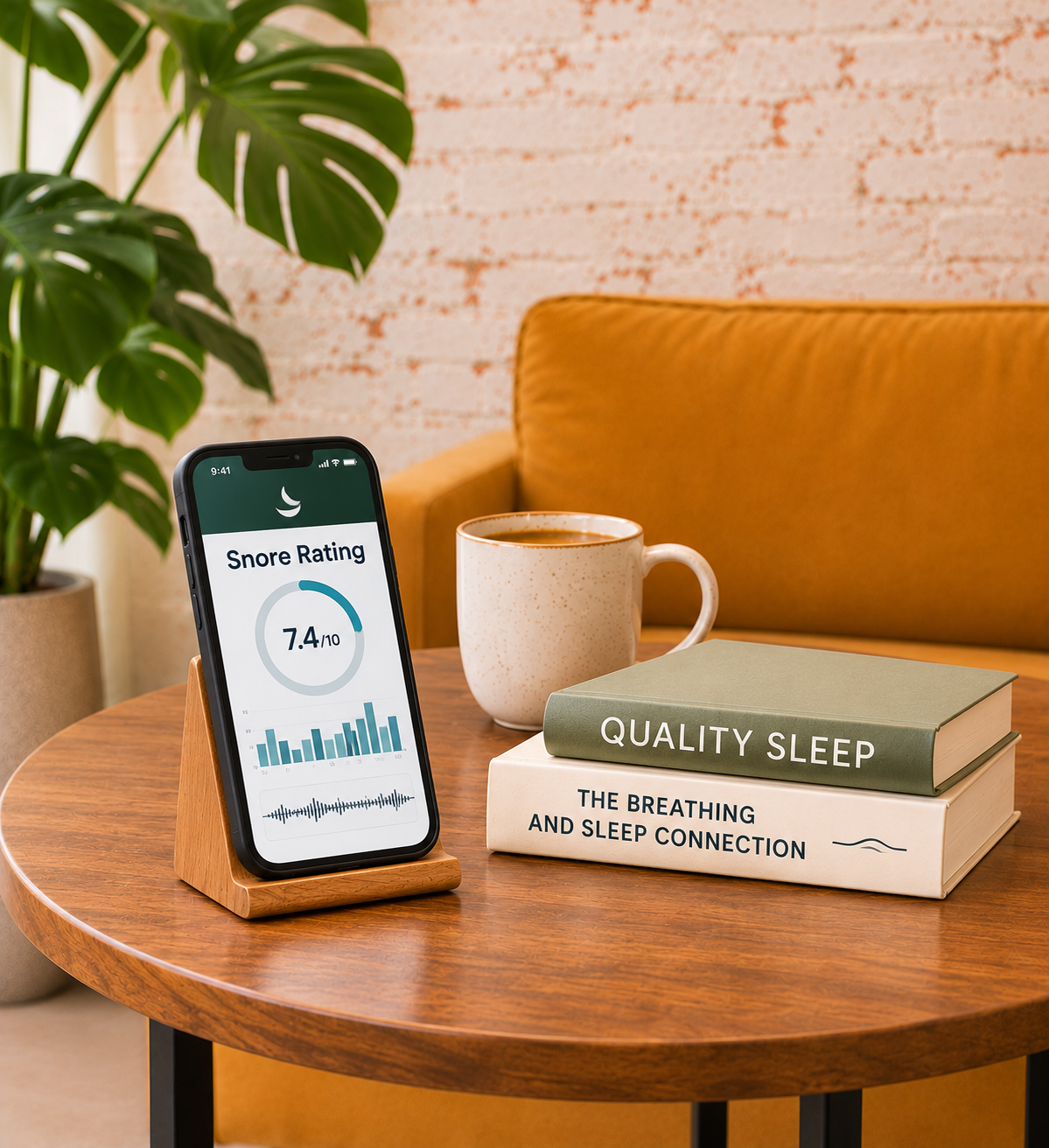
Snoring tells you that, for at least part of the night, air is not flowing freely.
Snoring that a partner or someone else notices, or that wakes you up.
Waking with a dry mouth or sore throat can mean you breathed through your mouth at night.
Feeling tired even after a full night in bed.
Snoring, noisy breathing or sleeping with the mouth open. This is not normal or healthy.
Snoring can exist alongside sleep apnea, so it is worth mentioning to your doctor. OSA is diagnosed by a sleep physician.
Snoring and mouth breathing almost always show up together.
Learn about mouth breathingNasal Breathing
When the tongue rests on the roof of the mouth and the lips are closed, air flows quietly through the nose and down an open airway. That tongue position helps support the airway from the inside, even as the muscles relax during sleep.
Mouth Breathing
When the tongue rests low, it tends to fall back toward the throat as the muscles relax at night, which is one reason snoring and mouth breathing so often go together. Snoring sits on a spectrum called sleep-disordered breathing: at one end the airway is narrowed and noisy, and at the other it closes off for moments at a time, which is sleep apnea. Even without apnea, a narrowed airway can make sleep lighter and less restful.
Airway and oral muscle tone, a tongue that rests on the roof of the mouth, and nasal breathing with the lips closed. For some people, that may reduce snoring. Results vary.
Therapy does not diagnose sleep apnea, and it is not a replacement for physician prescriptions. Talk with your sleep physician or airway-focused dentist about what you're experiencing.
Snoring is a sign that air isn't moving freely while you sleep.
60 to 90 minutes in person at our Ithaca office. We look at your history, symptoms, structure and function to get a whole-picture view of what's going on with your breathing, sleep and oral muscle habits.
Sessions every 1 to 3 weeks, virtually or in person, to learn exercises tailored to your specific needs. Exercises are simple (and fun!) and progress through your program.
About 10 to 20 minutes a day: working on tone and coordination, ultimately building new habits around breathing and oral function patterns that become automatic.

Ashley works alongside sleep physicians, dentists, orthodontists, ENTs and body workers. If your assessment suggests another provider should be part of your care, we will suggest that or work with who you already see.
Breathing and sleep touch nearly every part of your health, so a team approach is ideal. At Ithaca Myofunctional Therapy, we focus on the upper airway and oral function, and we work alongside the providers who care for the rest of you.
You can schedule on your own, or your provider can fill out our digital referral form. A referral is not necessary.
Please talk with your doctor about your snoring, especially if it's accompanied by gasping, choking, gurgling, or pauses in breathing that may indicate sleep apnea.
Children who snore should be seen by their doctor.
You don't need a doctor's referral or a sleep study before your first visit with us. Depending on your symptoms and what we find at your assessment, we may strongly recommend that you see your doctor or have a sleep study. It's the best way to get a clear picture of what's really happening while you sleep.
Your assessment takes 60 to 90 minutes in our Ithaca office. Ashley reviews your health history, looks at how your mouth, tongue and face muscles are working, and takes measurements to build your plan.
What to send us:
The Pre-Assessment Guide walks you through what to notice before your appointment.
Snoring happens when air has to squeeze past relaxed tissue in the throat and mouth during sleep. A tongue that rests low and falls back, mouth breathing, enlarged tonsils, nasal congestion and sleep position can all play a part.
Myofunctional therapy works on the tone and resting position of the tongue, lips and throat muscles, which helps open the airway space and therefore may help reduce snoring.
No, but it can happen along with sleep apnea and can be a sign of it. If your snoring comes with gasping, pauses in breathing or heavy daytime tiredness, please talk with your doctor. Sleep apnea is diagnosed by a physician through a sleep study.
Yes, absolutely. Children who snore should be seen by their doctor. A myofunctional assessment can also look at breathing habits, tongue position and oral habits that may be part of the picture.
They may change airflow for some people. They do not retrain the muscles involved. Please ask your doctor before taping your mouth at night.
Call us at (607) 602-2886
Hours: Monday–Thursday, 8:30 AM–4:00 PM, or appointments by request