Worn or Chipped Teeth
Wear, chips or sensitivity that a dentist may notice.
Orofacial Tension
Often tied to how you breathe and where your tongue rests.
Clenching and grinding at night can be connected to how you breathe and where your tongue rests. Myofunctional therapy works on tongue posture, nasal breathing and properly functioning orofacial muscles, which may ease jaw tension habits.

Grinding often happens during sleep, so many people only find out when a partner hears it or a dentist sees dental wear.
Wear, chips or sensitivity that a dentist may notice.
Headaches, especially when you wake up.
A jaw that already feels sore or tired in the morning.
Attrition
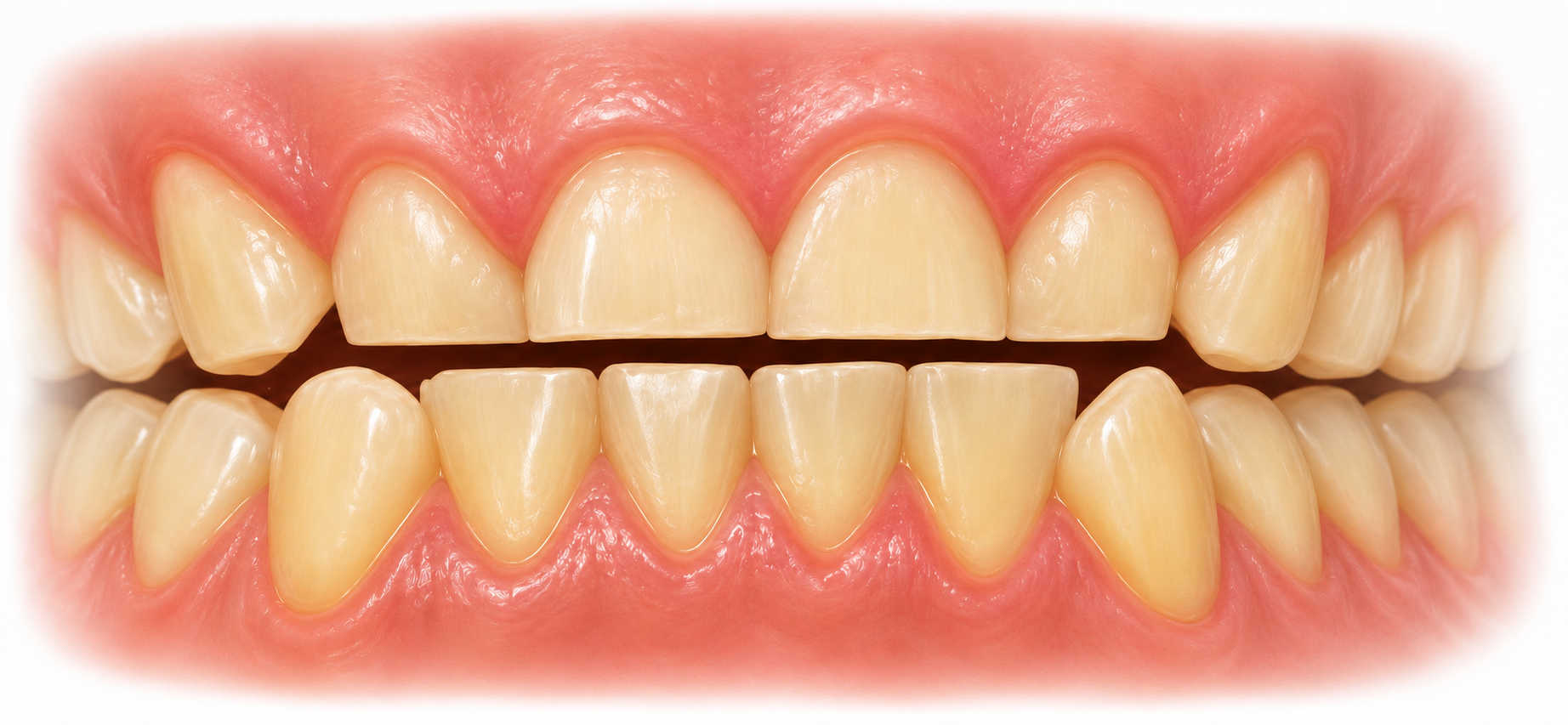
Recession
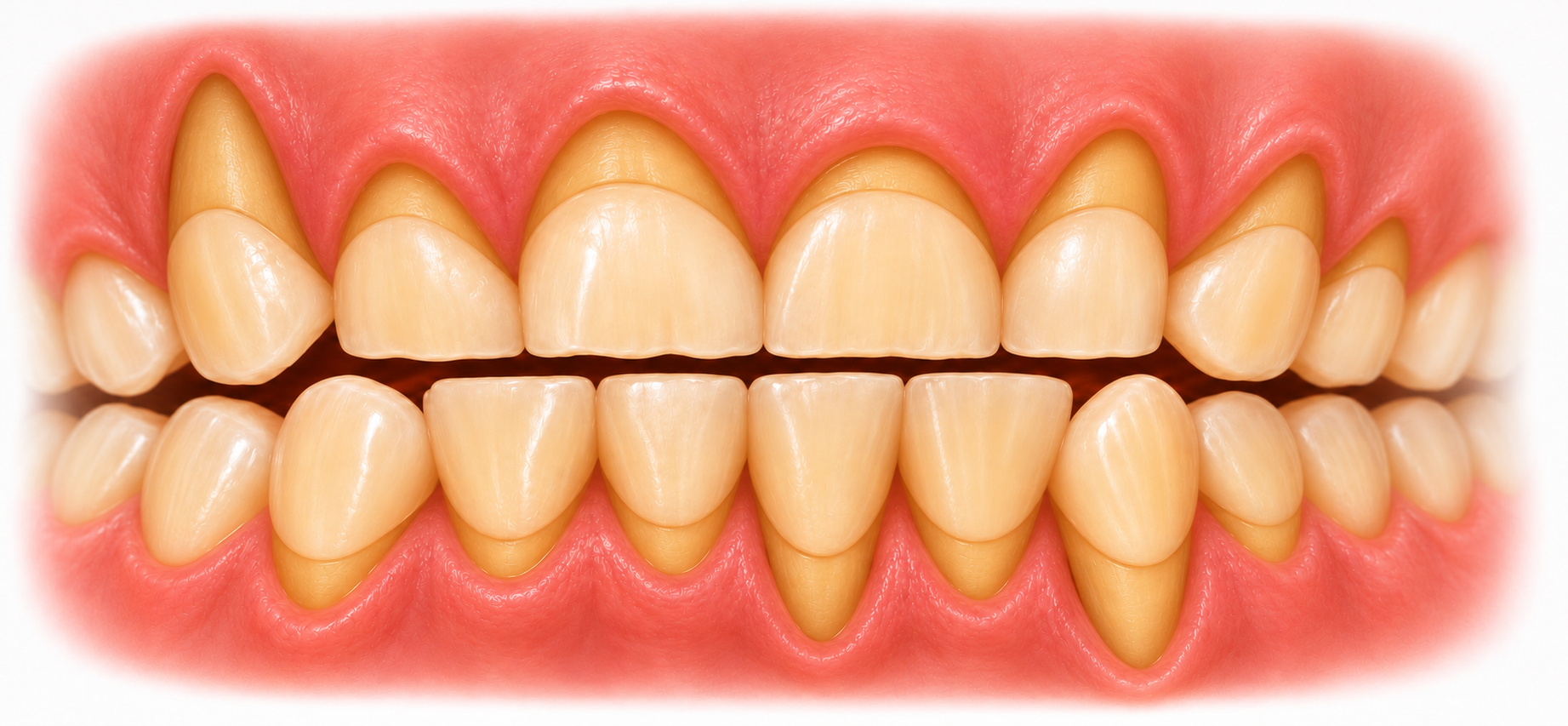
Abfraction
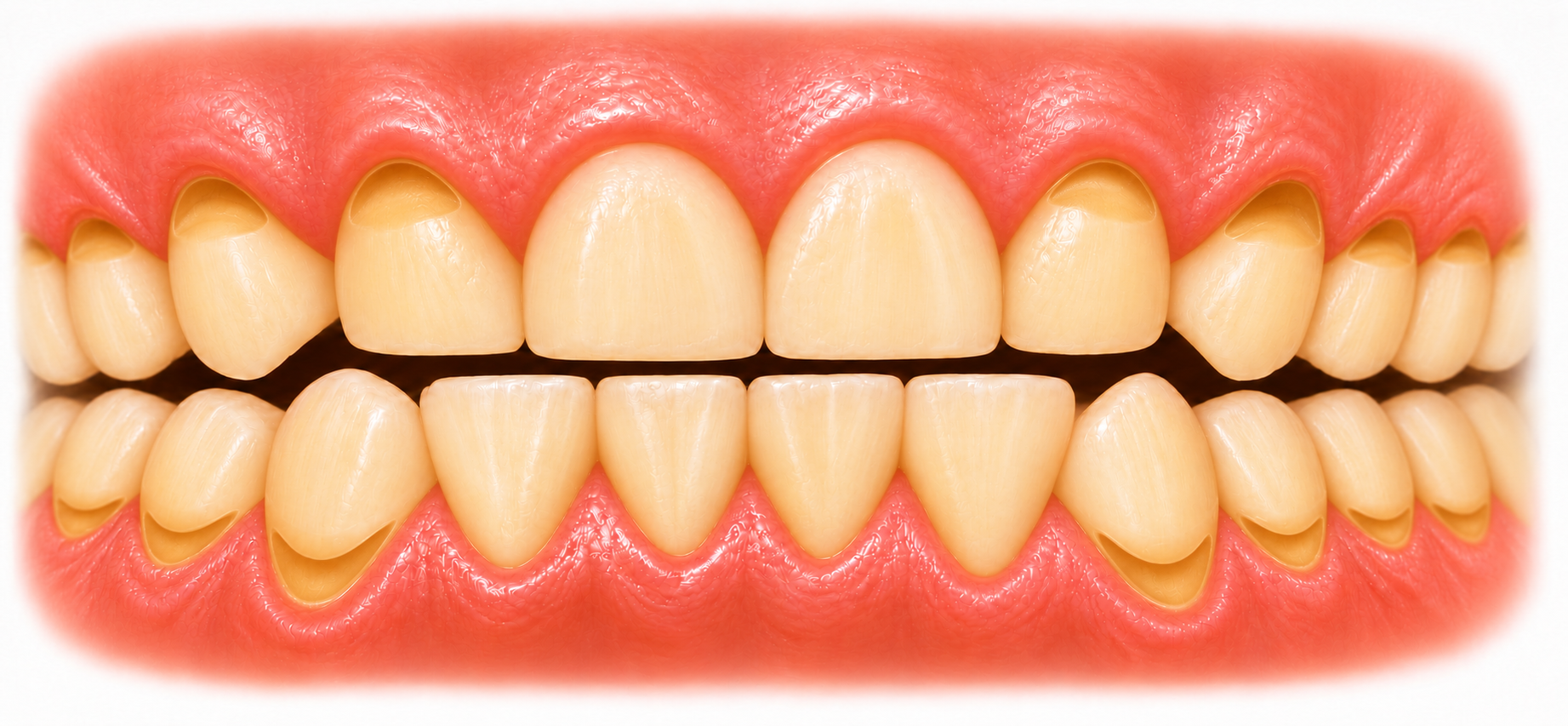
When the tongue rests low and partly blocks the upper airway, the body may respond by activating muscles that pull the tongue forward. That can look like clenching, or like shifting the lower jaw forward, which is grinding. Over time, this muscle work can lead to tension, headaches and wear on the teeth.
These are some examples of ways this shows up in your dental health.
The tongue resting on the roof of the mouth, lips closed, nasal breathing and a slight space between the teeth at rest. This helps keep the tongue up and out of the airway, reducing clenching, grinding and jaw tension.
Your dentist remains the right person for tooth wear, night guards and jaw joint concerns. Therapy does not replace the dental care needed to address the results of grinding.
A relaxed jaw starts with where your tongue rests.
60 to 90 minutes in person at our Ithaca office. We look at your history, symptoms, structure and function to get a whole-picture view of what's going on with your breathing, sleep and oral muscle habits.
Sessions every 1 to 3 weeks, virtually or in person, to learn exercises tailored to your specific needs. Exercises are simple (and fun!) and progress through your program.
About 10 to 20 minutes a day: working on tone and coordination, ultimately building new habits around breathing and oral function patterns that become automatic.

Ashley works alongside dentists, TMJ specialists, physical therapists, chiropractors and sleep physicians. If your assessment suggests another provider should be part of your care, we will suggest that or work with who you already see.
Jaw tension often has more than one cause, from bite and joint concerns to stress and how you breathe at night. At Ithaca Myofunctional Therapy, we focus on tongue posture, breathing and orofacial muscle function, and we work alongside the providers who care for your teeth, joints and sleep.
You can schedule on your own, or your provider can fill out our digital referral form. A referral is not necessary.
See your dentist if you notice tooth wear, chipped teeth, jaw pain or clicking. If grinding comes with loud snoring, gasping or heavy daytime tiredness, please also talk with your doctor about your sleep.
Your assessment takes 60 to 90 minutes in our Ithaca office. Ashley reviews your health history, looks at how your mouth, tongue and face muscles are working, and takes measurements to build your plan.
What to send us:
The Pre-Assessment Guide walks you through what to notice before your appointment.
There can be many reasons, including stress and medications. One that is often the culprit, and often missed, is airway patency and breathing habits. When the tongue rests low and the airway is partly blocked, the jaw muscles may work to pull the tongue forward and open the airway, which can show up as clenching or grinding.
Oftentimes. That is one of the things Ashley looks at in your assessment: how you breathe, where your tongue rests and how your jaw muscles are working.
No. Please talk with your dentist about your night guard. Therapy works on the muscle and breathing habits that may be involved, alongside the care your dentist provides. A night guard protects the teeth and should not be eliminated without direction from your dentist.
Yes. If you notice your child grinding at night, mention it to your child's dentist. A myofunctional assessment is also worthwhile, to look at how they breathe and sleep.
Childhood grinding is oftentimes dismissed as a phase, but it should not be ignored. Sleep health and jaw development are on the line. Childhood is the time to step in if needed, while we can still help guide growth and habits and, ideally, prevent commonly associated problems down the road.
Call us at (607) 602-2886
Hours: Monday–Thursday, 8:30 AM–4:00 PM, or appointments by request