Thumb Sucking
Thumb or finger sucking that is hard for your child to let go of.
Habit Elimination
Gentle help for letting go of a habit.
Thumb sucking, pacifier use and other oral habits can be hard for a child to let go of. Ashley Babb works one-on-one with children 4 and up, and their parents, to let go of these habits gently through a highly successful program built around positive reinforcement and support.

Some habits are easy to spot. Others, like biting the cheeks or chewing the tongue, can go unnoticed.
Thumb or finger sucking that is hard for your child to let go of.
A pacifier that is hard to give up.
Biting or chewing the fingernails or cuticles.
Biting the inside of the cheeks, often without noticing.
Chewing on pens, pencils and other objects.
Habitual chewing or biting the tongue.
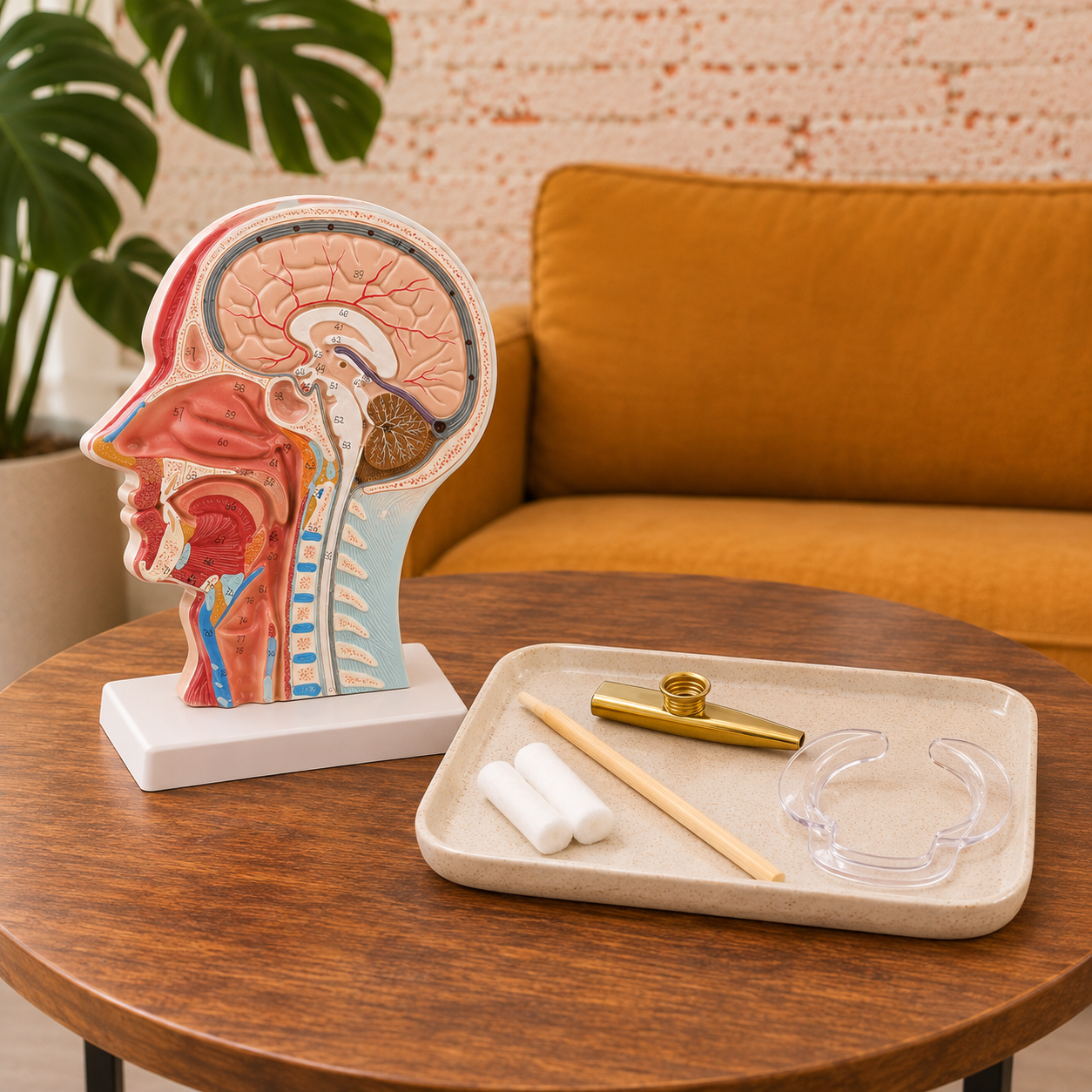
When a habit runs for a long time, it can get in the way of where the tongue rests, influence jaw development and alter tooth position. A thumb or pacifier keeps the tongue low and the lips apart, which may encourage mouth breathing. Other chewing or biting habits are often sensory-seeking habits when the tongue isn't positioned where it should be.
Over time, these habits may affect orofacial growth, how the teeth erupt, sleep and breathing. Research has linked thumb and pacifier sucking with a higher chance of open bites and crossbites in children.
Habit Elimination helps your child stop oral habits like thumb sucking, pacifier use or nail biting, which may affect jaw growth, sleep and breathing. A parent is part of every step.
We look at the habit and tailor the program to make sure we eliminate it. You leave with all the tools and support you need.
By this point, we have checked in with you and your child every day and are well on our way to success.
At points throughout the program, we check in to make sure all is going well, and keep supporting your child and the family supporting them.
Success! We celebrate your child letting go of the habit.
After the 30 days, if the habit has affected where your child's tongue rests or how they breathe, chew and swallow, we may recommend myofunctional therapy as a next step. If you choose to move forward with a program and your child is ready, we can get started on your timeline.
Oral habits aren't just a phase. They're shaping the jaws, the teeth and where the tongue rests.
You can schedule on your own, or your provider can fill out our digital referral form. A referral is not necessary.
Many children let go of oral habits on their own in infancy or toddlerhood. If it is still going on once your child hits age 4, that is a reasonable time to step in with our Habit Elimination program, because most children that age can understand and agree to quitting the habit.
It may be time to get help if a habit is still going on after age 4, if it is hard for your child to stop even when they want to, or if you notice mouth breathing or an impact on dental alignment and jaw shape.
If you have concerns about your child's teeth, bite or development, please talk with your child's dentist or pediatrician too. Habit Elimination works alongside their care.
We plan for 30 days. When a child is ready and the family follows the program, that is typically all it takes to officially call it quits.
Sometimes there's a hiccup along the way, like an illness, a big change at home or a tough stretch for your child, and we may need to pause or extend the program. If that happens, we adjust the plan and keep supporting your child until the habit is gone.
We don't start the program unless your child says they are ready. We get on your child's level and explain why the habit isn't good for them. We talk about habits, how great it will feel to move past this one, and why.
Then we walk your child through what the program looks like and ask if they are ready. You know all the details beforehand, including what the program involves and what it costs, and have already agreed to it. If your child says yes, we start the program right then.
No. Habit Elimination is gentle and encouraging. Children usually turn to these habits for comfort, and the goal is to help your child let go of the habit at their own pace, with support from you.
You play a big part, and you won't be doing it alone. Our Habit Elimination program includes a whole plan for supporting your child at home, built on positive reinforcement from everyone involved: parents, siblings, grandparents and caregivers. Together we work out what triggers the habit, such as bedtime, screen time or being tired.
We also look at big life events, like a new sibling, a move or starting school, that could get in the way of the program's success, so we can plan around them and set your child up to succeed. You will begin the program feeling prepared and encouraged.
Likely. A long-running habit can affect where the tongue rests and how a child breathes, chews and swallows. At the assessment, Ashley looks at the whole picture and lets you know whether Habit Elimination on its own is a good fit, or whether the Mini Myo Program or a full therapy program would help too.
Call us at (607) 602-2886
Hours: Monday–Thursday, 8:30 AM–4:00 PM, or appointments by request